Behind the Build
What Actually Happens Before Your Cabinets Get Cut
Coastal Cut To Size · · 5 min read
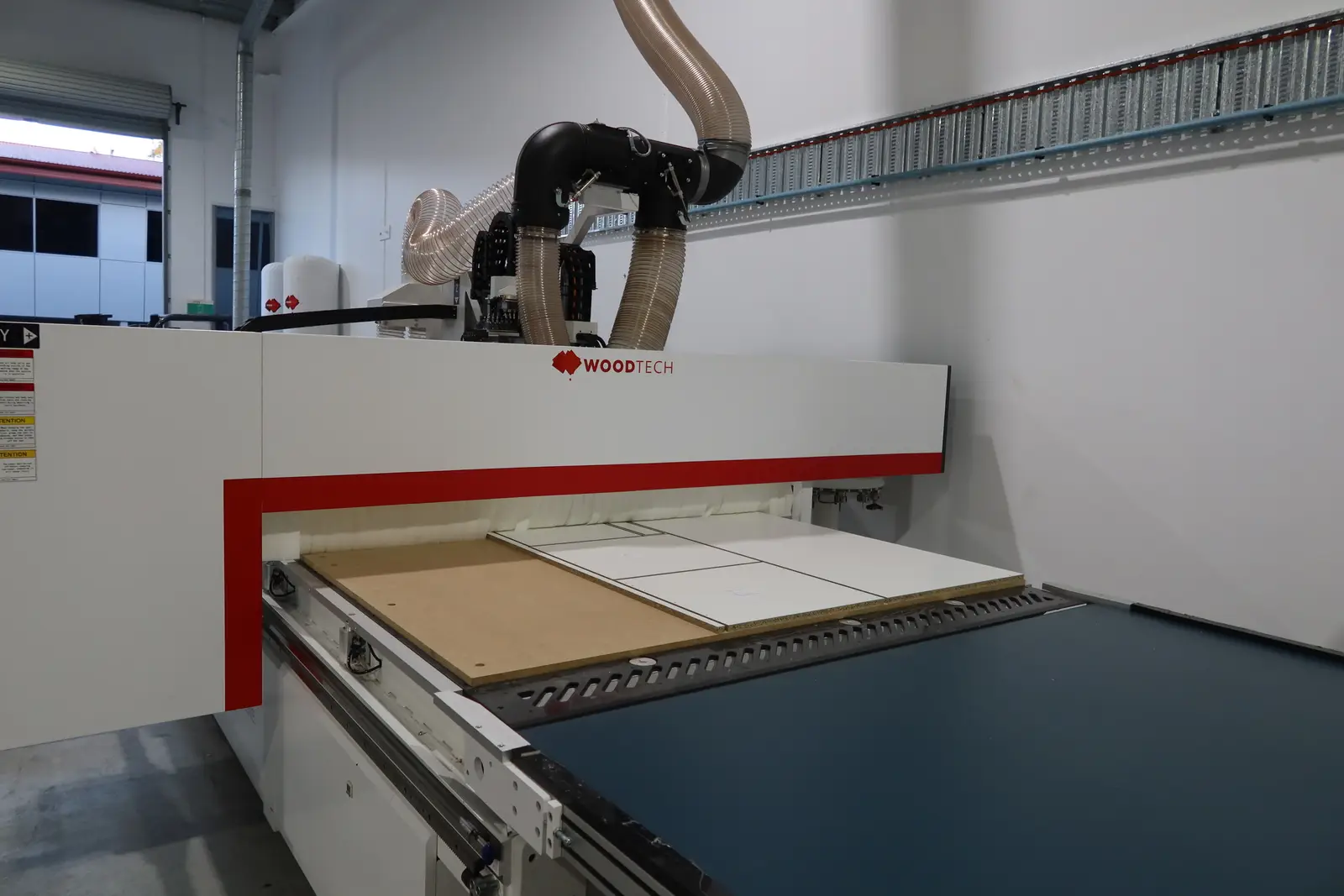
Most people probably picture cabinet manufacturing starting at the CNC. A sheet goes on the bed. The vacuum turns on. The tool spins up. Parts get cut, edges get glued, cabinets get packed. That is the obvious part.
But by the time a cabinet part gets cut, the job has already lived a whole little life.
Where the quiet work starts
It usually starts with a call, an email, or an enquiry form. Someone sends through an idea, a set of plans, a rough sketch, or sometimes just a description of what they need. From there, the job slowly turns from words and drawings into something real.
Before anything gets made, there are details to check. Materials, edging, hardware, measurements, clearances, fillers, doors, drawers, rangehoods, oven towers, kicks, end panels, grain direction, and all the little things that decide whether a job comes together cleanly or becomes annoying later.
On paper, cabinetry can look simple. In the factory, it has to actually work.
A drawing might look fine at first glance, but then you notice a drawer system that needs a second look, an appliance clearance that has to be right, or an overhead cabinet that is so deep it feels like it belongs in a giant's kitchen.
A job that made us slow down (the good kind)
That happened on a recent job. It was a big full flat pack kitchen. Tall ceilings, massive overheads, oven towers, rangehood details, deep cabinetry, a lot of parts, and plenty of places where the small details mattered. The sort of job where you do not just press go and hope for the best.
You check it. Then you check it again.
Then comes nesting
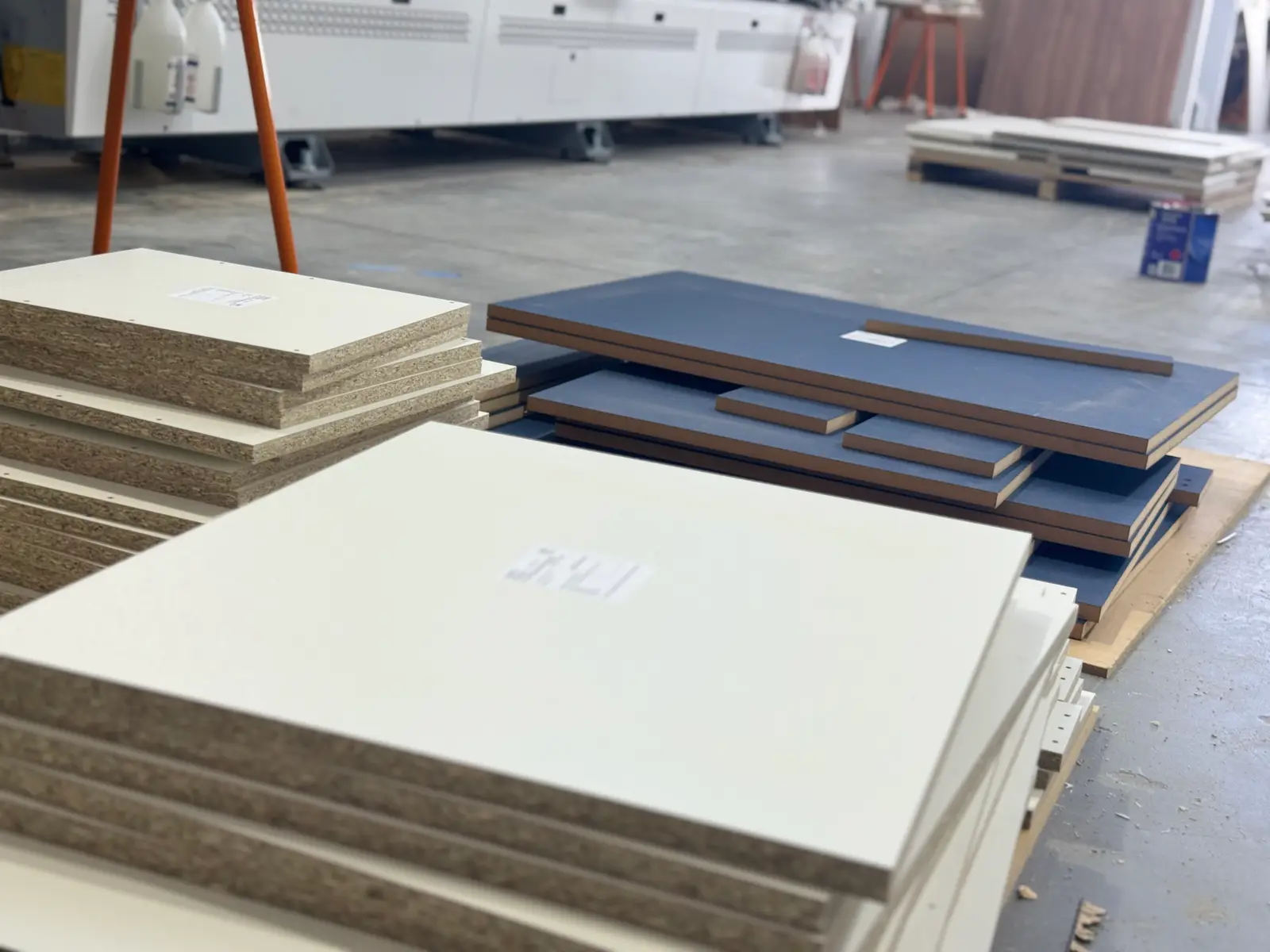
Once the job is ready, one of the first real production steps is nesting. That is where all the parts get laid out across the sheets of board, and suddenly the job stops being an idea and starts becoming a manufacturing plan. It is a bit like seeing the job's skeleton for the first time.
The nest tells us what materials we need. It tells us how many sheets are involved. It shows where the value can be found, what sheet sizes make sense, what needs ordering, and how the job is likely to move through the factory.
And from there, everything starts connecting. The board gets ordered. The edging needs to match. The labels need to make sense. The cut files need to be right. The cabinet logic needs to line up with the hardware. The factory needs space. The offcuts need somewhere to go. The parts need to come off the machine in a way that keeps the job moving.
None of that is glamorous. But that is where a lot of the quality comes from.
Ten business days, delivered in full
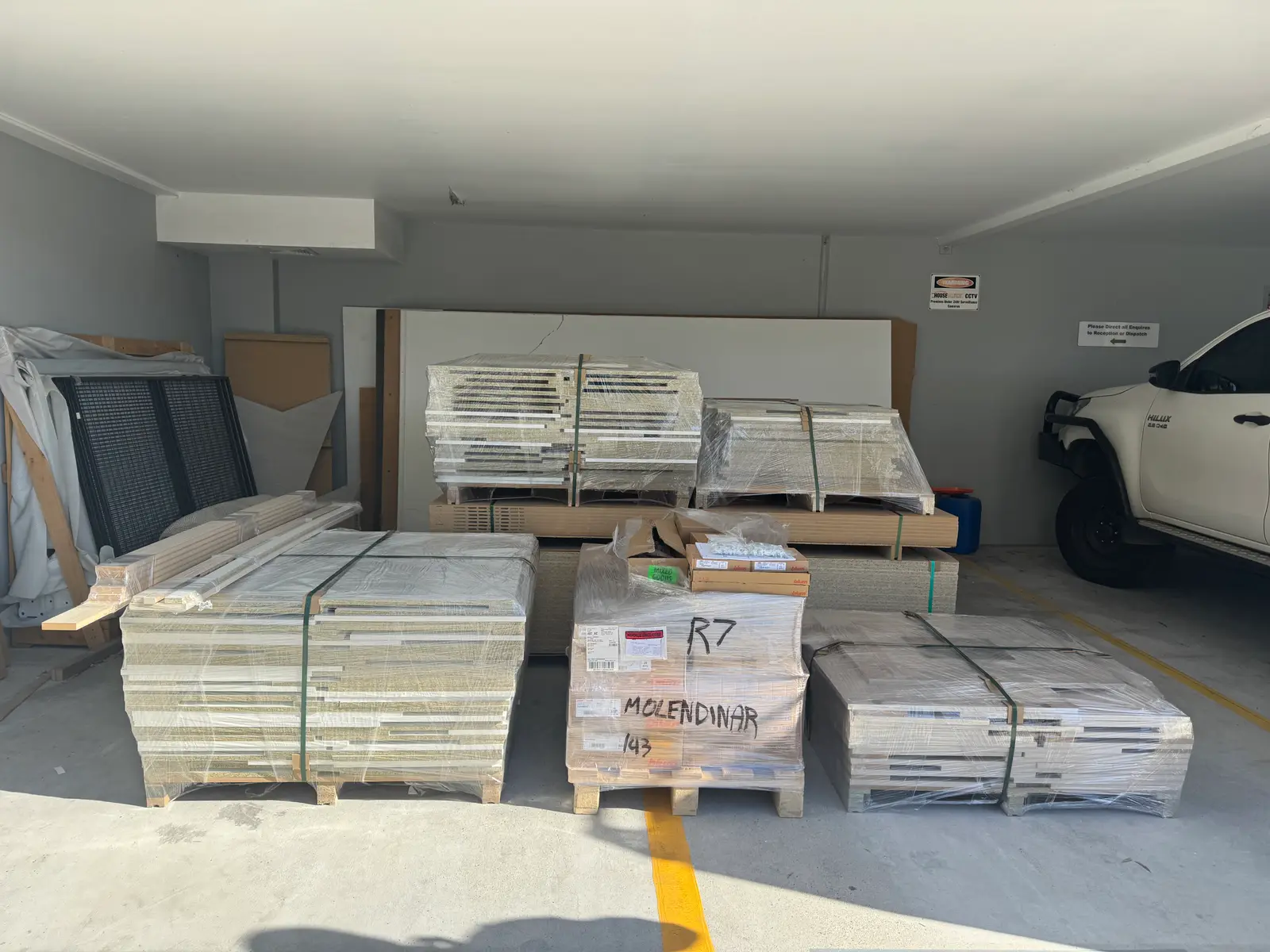
Recently, we moved that big flat pack kitchen from deposit to delivery in exactly 10 business days. It was delivered in full on the 24th. That felt good. Not because it was some wild miracle, but because the job had a lot going on and it still moved through cleanly.
There were moments where we had to slow down and think. Not stop, not panic, just think properly. Check the rangehood. Check the oven towers. Make sure the drawer logic was safe. Make sure the labels were usable. Make sure the job could actually move through the factory without relying on luck.
Rushing is when you skip the thinking. Moving quickly is when the thinking has already been done.
Building our own system
We are also building more of our own internal manufacturing system, which means we can shape the process around the way our factory actually works. The nesting, the labels, the cut files, the way parts are handled, the way offcuts are managed, all of it can keep improving.
That is exciting, because every real job teaches the system something. A small part that wants to move on the CNC teaches you something about vacuum and hold-down. A tricky material teaches you something about edging. A big job teaches you something about planning. A strange cabinet teaches you something about logic.
The rhythm of the floor
And the factory has its own rhythm through all of this. Some days it is clean and calm. Other days it looks like the job has exploded into sheets, parts, tape, labels, offcuts, and half-finished stacks. Then you clean it, reset it, and make room for the next round.
Clean it. Work it. Mess it up. Clean it again.
That probably sounds like a joke, but it is true. A clean factory is not just about looking nice. It gives you room to move, room to stack, room to sort, and room to keep the work flowing.
It is not just cutting board
That is really what cabinet manufacturing is. It is turning a customer's idea into a set of real parts that can actually be built. It is making decisions before they become problems. It is thinking through the job while it is still on the screen, so the factory has a better chance of running smoothly when the sheets hit the machine.
By the time your cabinets are being cut, a lot has already happened. The calls. The drawings. The checking. The nesting. The material choices. The edging. The software. The labels. The planning. The little fixes. The quiet decisions that most people never see.
And if we have done our job properly, that is how it should feel from the outside. Simple. But behind that simple result is a lot of care, a lot of movement, and a lot of thinking.
The cutting is just the loud part.
Related services: Cut to Size Kitchens Trade Supply